
Long Island Mowing Heights
Introduction
Proper lawn care—especially mowing—may appear straightforward, but there is a lot to understand if you want to consistently maintain a healthy turfgrass lawn. This article outlines several simple, effective best practices to help ensure your lawn stays dense, vigorous, and green.
To start, ensure you are working with sharpened blades. Poorly sharpened blades cause excessive damage to leaf blades and stress out grass, leading to increased competition from weeds, pests, and diseases. You should never mow more than ⅓ of the length of the grass at once. When in doubt, mow high. Mowing high creates a canopy within the grass that is dark and thus doesn’t allow space for weeds to germinate.
This chart from Cornell Cooperative Extension is a great reference.[1] Long Island lawns generally consist of cool-season grasses such as Kentucky Blue Grass, Perennial Ryegrass and Tall Fescue. These grasses grow more aggressively in the spring and fall and will go semi dormant in the heat of the summer and cold of the winter.
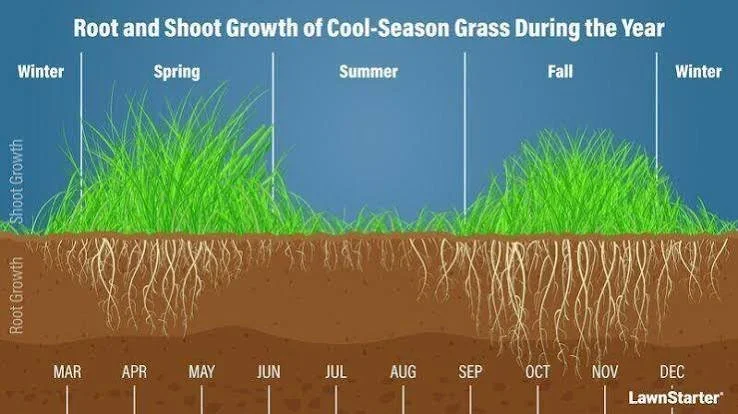
Source: Mowing heights debate by Rosie Wolf Williams via lawn starter (June 30th, 2026)[4]
Spring (April)
The first one or two mows of the year, you need to follow the 1/3rd rule. If your grass height is 6 inches, only cut it down to 4 inches. If you instantly cut it to 2 or 2.5 inches, it could shock the plant, stunt root development and make the lawn more vulnerable to drought and weeds. Progressively cut the lawn 1/3rd of its length until it is around 2 to 2.5 inches. By removing the dead, brown grass tips that are left over from winter, this allows the warmer spring sunlight to hit the soil crown, and encourages the lawn to green up faster. [2]
Late Spring (May to June)
Between May and June, the excessive rain and rising temperature means lawns are in peak growing months. Raising the mow height to 3 inches is crucial to allow the grass to develop a deep root system and create a thick canopy that shades the soil.[1]
Mid-summer (July to August)
New York summer brings intense heat and dry spells that make this the most critical seasonal adjustment. Often times, these cool-season grasses stress out and go dormant (turn brown). Cut grass between 3.5 and 4 inches so that blades shade the soil, keeping the root zone cooler and keeping soil moist.[5]
Early Fall (September to Mid October)
As the weather cools down and the precipitation increases, Long Island grass gets a second burst of aggressive growth. To encourage the lawn to knit tightly together and recuperate from any summer damage, cutting grass to 3 inches is ideal. Mowing lawns lower in September is also the ideal time and to do any aeration and overseeding. [1]
Late Fall (Later October to November)
As winter approaches, gradually lower your mower height on the last few mows of the year. If the grass is left too high, winter snow will compact tall blades of grass flat against the ground which will trap moisture. This will create a breeding ground for a fungal disease called snow mold and create a cozy habitat for voles and mice to chew up your lawn. The best height for this time of year is 2 to 2.5 inches.[3]
Conclusion
When it comes down to it, effective Long Island lawn care revolves around one essential tool—your mower. Whether you are lifting the deck to shield your turf from summer heat or dropping it low before the winter freeze, the results of these quick adjustments are massive. By strictly adhering to the golden 1/3rd rule and keeping pace with seasonal shifts, you will while cultivating a flawless lawn.
—————————————————————————————————————————————————————————————
Photo and Text Sources
Cornell Cooperative Extension / Cornell University Turfgrass Program:Lawn Guidance and Mowing Canopy Data.(text)
New York State Integrated Pest Management (NYS IPM):Spring Turf Management and Scalping Prevention Protocols.(text)
http://www.hort.cornell.edu/turf/pdfs/lawn-care-easiest-steps.pdf
University Extension Fungal Research:Snow Mold and Turf Rodent Habitat Mitigation Studies.(text)
Williams, Rosie Wolf. "Mowing Heights Debate." LawnStarter, June 30, 2026.(photo)
https://www.lawnstarter.com/blog/lawn-care-2/mowing-height-last-mow-low/
Certified Turfgrass Specialist Data:Cool-Season Grass Summer Dormancy Mitigation.(text)