
Boxwoods Pests and Diseases: What to Watch for
Intro
Boxwoods (Buxus) are popular landscape shrubs, but they are also vulnerable to a range of pests and diseases that can quickly reduce their appearance and health. On Long Island, the most important problems to watch for include boxwood leafminer, boxwood psyllid, spider mites, box tree moth, Boxwood blight, Volutella blight, and root-related decline.[1]
Boxwood leafminer
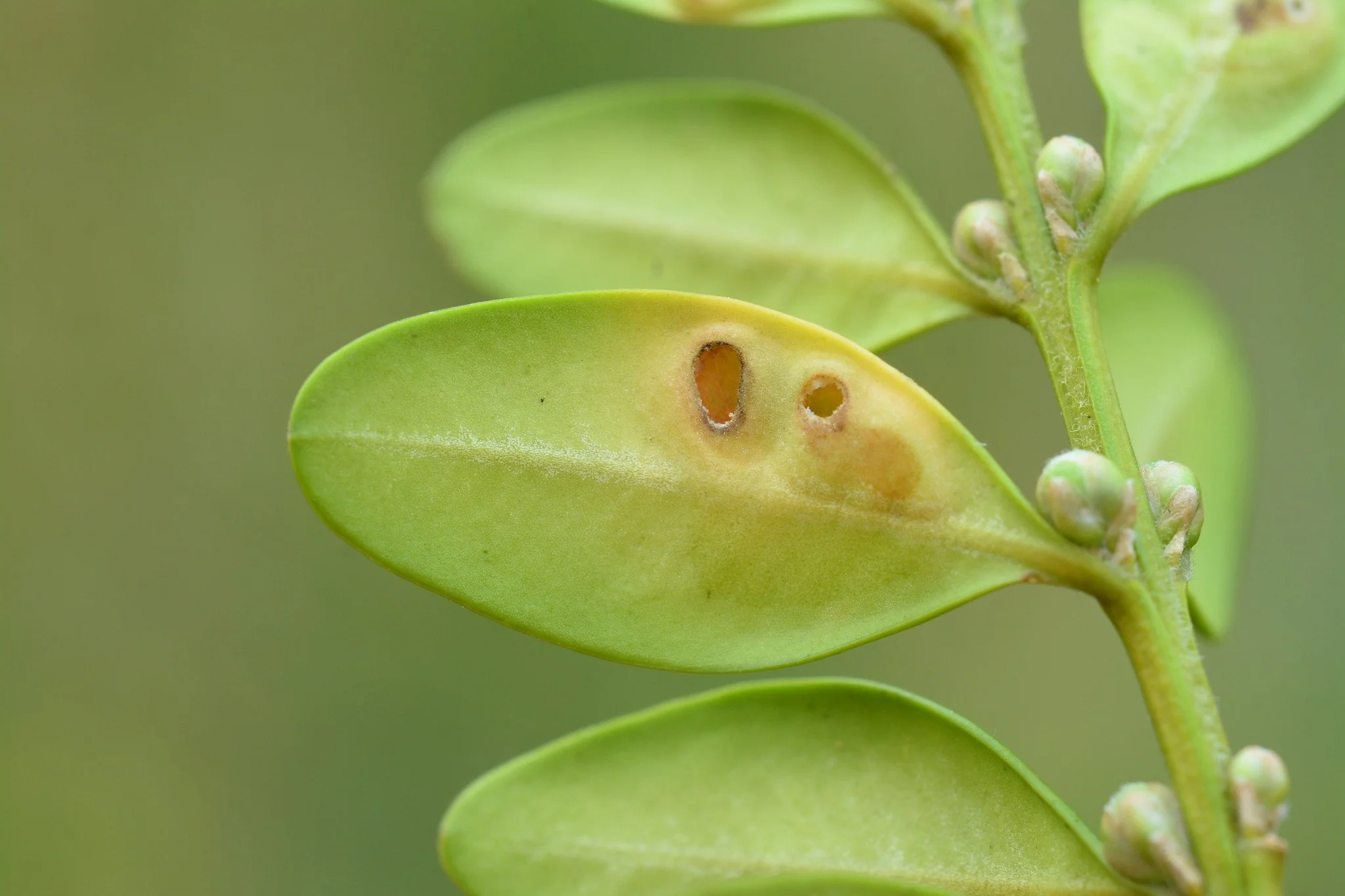
What to watch for:
Spring: sickly, yellow distorted foliage.
Summer–fall: blistered, puckered, swollen leaves — especially on new growth. Blisters turn yellow-orange by fall. Heavy multi-year infestations cause significant leaf drop. American and English boxwood most susceptible.
Boxwood leafminer is one of the most common and damaging boxwood pests in the New York area. These small flies lay eggs once per calendar year, usually in the beginning of June. Larvae feed inside new growth, creating blotchy mines that may eventually lead to yellowing and leaf drop if infestations are heavy.
This pest is especially important because the damage may not be obvious at first. By the time symptoms are visible, the larvae are already protected inside the leaf tissue, which makes early monitoring of spring leafminer flies especially valuable.[1]
Boxwood psyllid
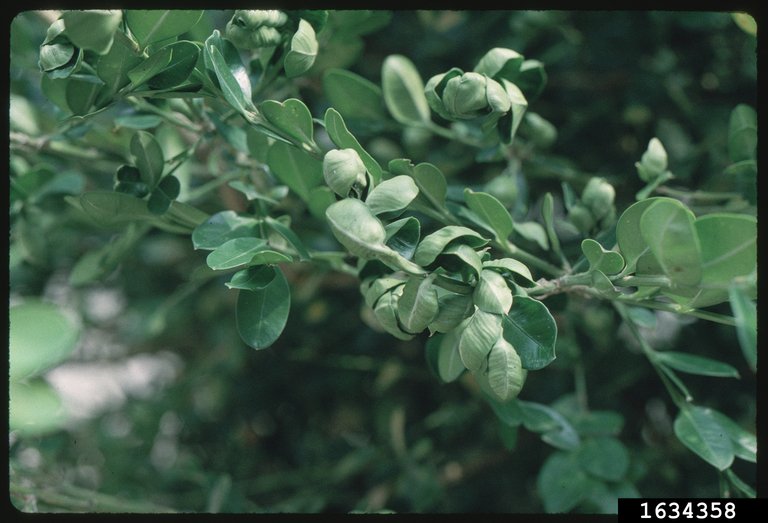
What to watch for:
Cupped, shell-shaped terminal leaves at branch tips from early spring through summer. Peel apart cupped leaves to find a small green nymph inside. Do not confuse with leafminer — psyllid cups and folds whole leaves; leafminer creates blisters within a flat leaf.
Boxwood Psyllid is a smaller leaf-hopper like insect, but it can still make plants look distorted and unhealthy. It causes the new growth to cup or curl, which is usually more of an aesthetic problem than a fatal one, though repeated stress can weaken the shrub over time. On damaged plants, infested branches can often be pruned out without contaminating the rest of the plant. Keeping the shrub healthy and catching problems early makes this pest much easier to manage.[2]
Spider mites
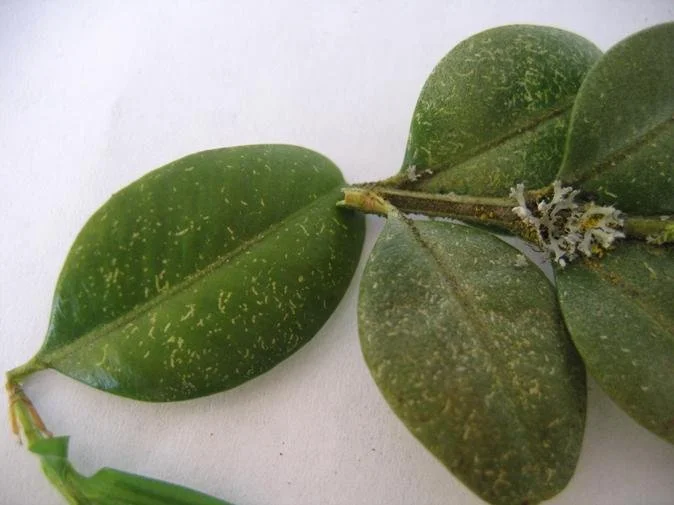
What to watch for:
Hold white paper under a branch and shake vigorously. Tan-colored mites on the paper confirm ID. 15+ mites per shake = significant infestation. Also look for yellowish eggs on leaf undersides in fall/winter. Scratch-pattern stippling (not discrete dots) distinguishes from two-spotted mite.
Boxwood mites feed on leaf surfaces and create tiny punctures that remove chlorophyll, leaving foliage stippled, pale, or silvery-looking.
Shade and summer irrigation can reduce mite pressure because dry, stressful conditions help populations build more quickly. For that reason, stressed boxwoods are often more likely to show visible mite damage.[1]
Box tree moth
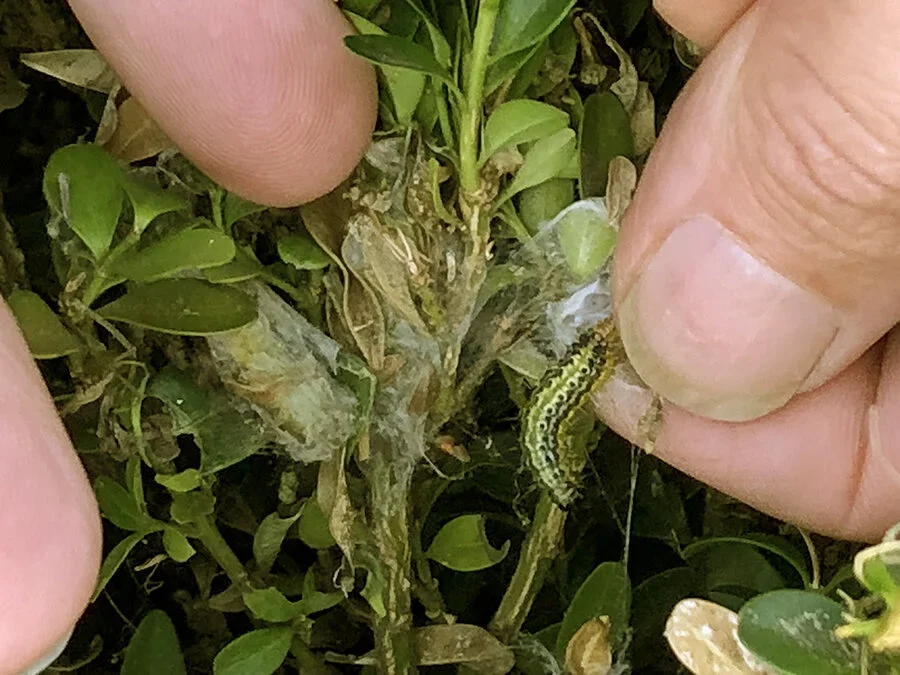
What to watch for:
Inspect the inner canopy for white webbing, droppings, chewed leaves and green/black caterpillars. Early detection is vital.
Box tree moths are one of the most serious new threats to boxwoods. It is an invasive pest that was first detected in the Northeast in 2021 and can cause severe defoliation, with heavy infestations sometimes leading to plant death.
This pest has become a major concern because it can quickly strip a shrub of leaves and then move on to bark and stems. Eggs are dropped on the underside of Boxwood leaves and take roughly 3 days to hatch. Newly hatched caterpillars feed on the underside of the leaf and continue to defoliate the plant as they grow larger. Depending on the weather, caterpillars mature into adult moths in about 14 days. They can also have overlapping generations between May and October and can survive winter temperatures as low as -22F. [12]
Boxwood blight
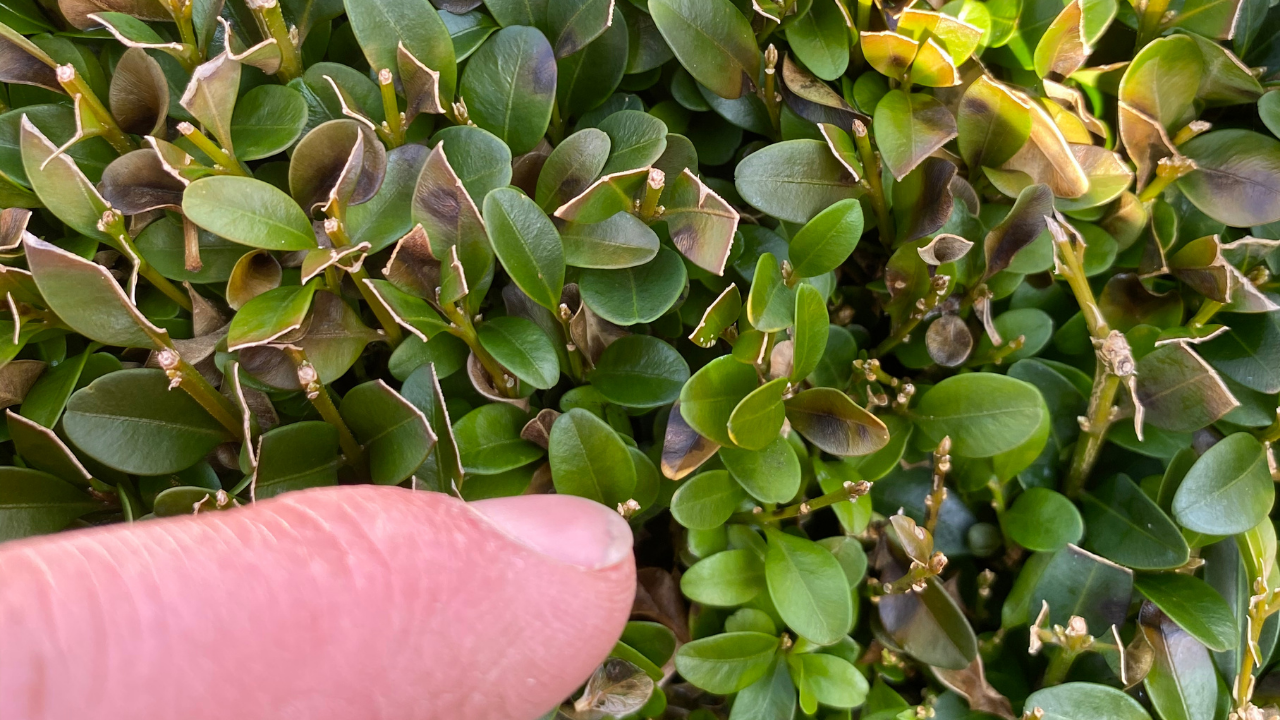
What to watch for:
Initially symptoms appear on leaves as black, cloudy spots that lack a distinct edge. This fungus may destroy all the shoots and leaves of an infected plant.
Boxwood blight or Calonectria blight is one of the most serious diseases affecting boxwoods. It will also strike much more quickly that the more familiar Volutella blight and can affect healthy rather than injured or stressed boxwoods although it spreads most easily in continuously wet conditions. Cornell recommends planting boxwoods where they get good air circulation, using drip or soaker irrigation instead of overhead watering, and destroying infected plants rather than trying to nurse them back.[6]
Volutella blight
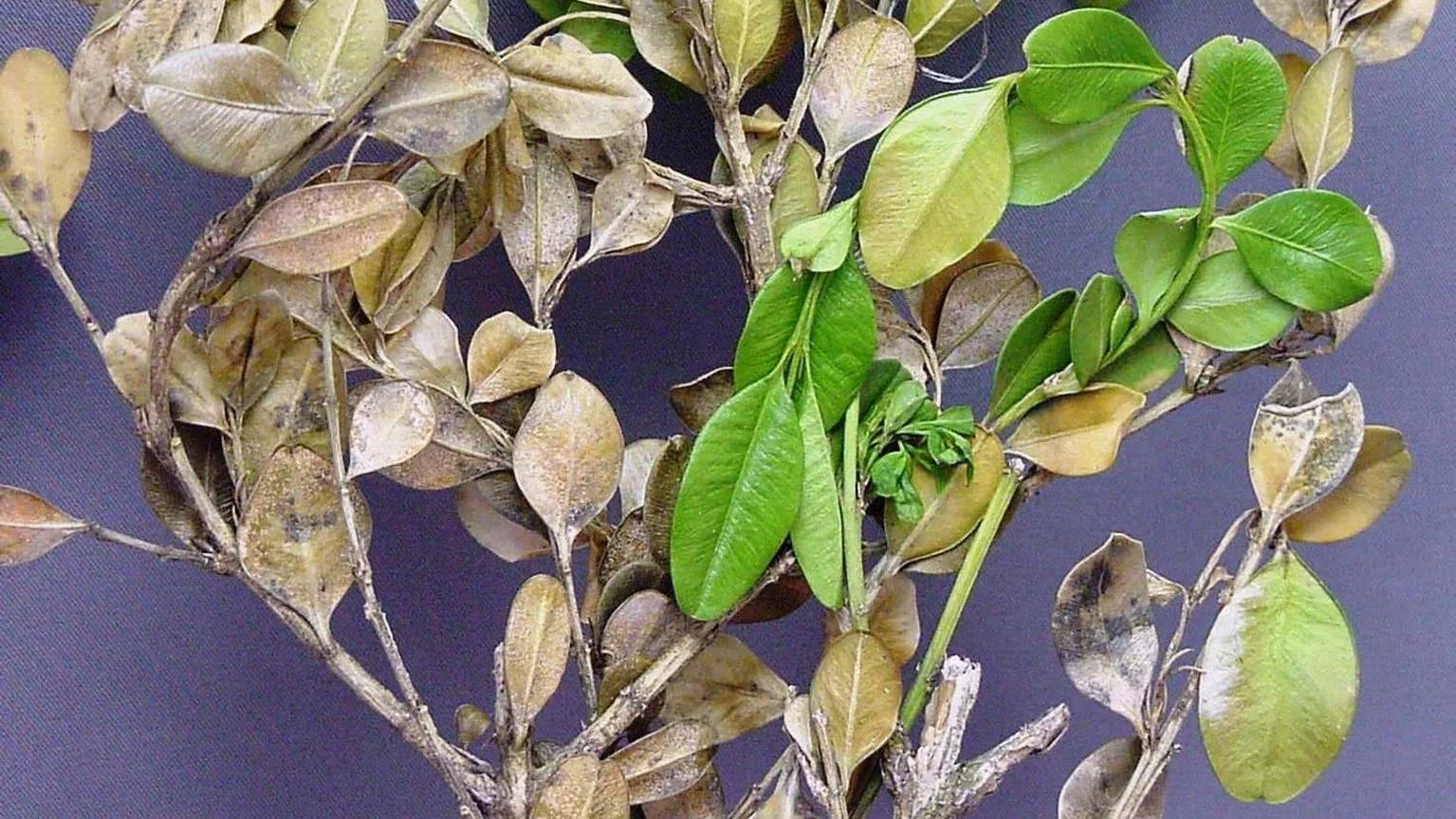
What to watch for:
Bronzing or tan foliage, dying branch tips, and, in wet weather, pinkish or salmon-colored spores on infected plant parts.
Volutella blight is another common boxwood disease, specifically a fungus that attacks plants that are stressed or damaged. Symptoms can include bronzing or tan foliage, dying branch tips, and, in wet weather, pinkish or salmon-colored spores on infected plant parts. In some cases, it takes months for infected leaves or branches to fall from the plant. Ensuring that plants have good drainage, pruning techniques and proper watering are extremely important. [10]
Root rot and decline
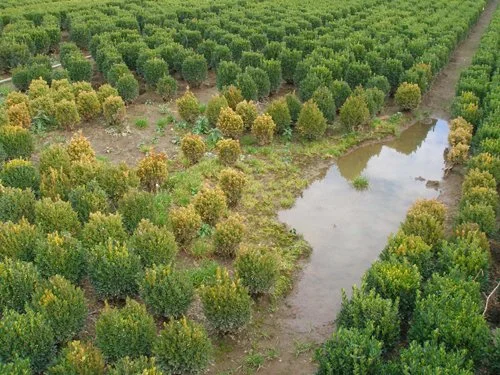
What to watch for:
Leaves become lighter green and eventually become purplish brown or a pale straw color. The roots become softened and sometimes loose bark and cankering at the soil line are also noted.
This disease will kill infected plants. The challenge is that root decline often looks similar to other boxwood problems at first. That makes site conditions an important clue when diagnosing a sick shrub.[9]
How to tell the difference
Boxwood psyllid - Leaf cupping almost always points toward Boxwood Psyllid
Boxwood mites - Fine yellow to white scratch like mines
Boxwood leafminer - Leaf mines, blistered and puckered leaves
Boxwood blight - black leaf spots with rapid defoliation
Vutella blight - Dead leaves remain attached for long periods of time
Box tree moth - Look into inner part of plant for webbing and caterpillars.
Root rot - Slow plant decline, wilting and yellowing through plant even in adequate soil moisture. Root examination show blackened mushy roots.
The Cornell Suffolk photo guide[10] is especially useful here because it shows how many of these symptoms appear in real plants. For gardeners and landscapers, that kind of visual comparison can make diagnosis much easier.
Prevention and management
Boxwood leafminer - Systemic insecticides can be applied to soil in the fall or early spring. Include a penetrating surfactant with foliar applications and direct sprays toward leaf undersides. Planting resistant varieties that are resistant to leafminers will prevent further issues.[10]
Boxwood Psyllid - Systemic insecticides can be applied in Early May for Nymphs and Early June for egg laying adults. These pests usually only cause cosmetic issues but can still make things difficult for Boxwoods. Minimize aggressive pruning in late spring helps prevent the rapid flush of new growth they prefer.[10]
Spider Mite - Systemic insecticides can be applied June-September when conditions are hot and dry. Higher populations of boxwood mite and injury are sometimes associated with soil applications of imadaclorpid often used for leafminer or psyllied-monitor treated plants for mites. Boxwood mites can be controlled by periodic blasts of water, dislodging them from foliage, or with miticides and/or horticulture oil in early May.[10]
Boxwood Tree Moth - Systemic insecticides can be applied Be sure to check new plants for infestation before planting. Inspect Boxwood interiors weekly for eggs and young larvae. In late fall or early spring, clean out leaf litter and debris from the base of the shrubs, as young caterpillars overwinter on webs attached to leaves. [10]
Boxwood Blight - Systemic fungicides can be applied in early spring. To avoid introduction of the fungus to a landscape or nursery, carefully examine new plants for symptoms. If the disease appears, the plant should be carefully pruned or discarded entirely.[8]
Volutella Blight - Systemic fungicides can be applied before new growth and after pruning. Prune out affected stems below the affected area, disinfecting pruners with 70% ethanol between cuts. Consider improvements in winter protection and irigation management to reduce environmental stress.[10]
Root Rot - Systemic fungicides can be applied as a preventative measure if there is a wet spring or poor drainage. If root rot is discovered, remove ailing plants and replant with an alternative shrub that is relatively resistant to root rot. Avoid planting in heavy soils that drain poorly. Avoid planting deep and overwatering.[10]
We highly recommend consulting and using licensed applicator to ensure proper integrated pest management programs. Please reach out to our team to set up a consultation.
Conclusion
For years, boxwoods have been the undisputed royalty of the Long Island landscape. These versatile evergreens can be valuable and attractive landscape shrubs, but they are vulnerable to several common pests and diseases that can quickly affect their health and appearance. Regular inspection, proper spacing, careful watering, and early identification of problems are the best ways to reduce damage and protect plants over time. Cleaning pruners and tools before and after each use is crucial to ensure the disease is not introduced from another property or plant. For gardeners on Long Island and in similar climates, staying alert to boxwood blight, leafminer, mites, psyllids, and box tree moth is especially important because local conditions can make these problems more severe.
Sources:
1. New York Botanical Garden. Boxwood: Boxwood Pests. Lib guides. (2026, May 17th) https://libguides.nybg.org/c.php?g=983941&p=7166305
2. Shick, Jessica. The Trouble with Boxwoods. Cooperative Extension of Somerset County. (2024, November 15th) https://somerset.njaes.rutgers.edu/2024/11/15/the-trouble-with-boxwoods/
3. Roestta, Robin. Boxwood Spider Mite. Oregon State University. (2019)
https://agsci.oregonstate.edu/nurspest/mites/boxwood-spider-mite
4. Woodward, Marie. The Challenge of Boxwoods: Pests, Disease, and Alternatives. Homegarden. (2025, February 22)https://homegarden.cahnr.uconn.edu/2025/02/22/boxwood/
5. New Gen Boxwood. Box Tree Moth Concerns. New gen boxwood.(2021, June 7th)
https://www.newgenboxwood.com/blog/2021/6/7/box-tree-moth-concerns
6. Cornell University Cooperative Extension of Suffolk County. Boxwoods pests & disease on Long Island. Ccesuffolk. https://blogs.cornell.edu/ccesuffolkligardening/2018/12/14/from-the-horticulture-diagnostic-lab-boxwood-blight/
7. Rahman, Mahfuz. Boxwood Blight. West Virginia Extension. (2023, August) https://extension.wvu.edu/lawn-gardening-pests/plant-disease/landscape-tree-disease/boxwood-blight
8. Moorman, Gary. Boxwood Diseases. Pennstate Extension. (2023, November 21)
https://extension.psu.edu/boxwood-diseases
9. Rawlins, Karan A. Boxwoods: Identify and Manage Common Problems.University of Maryland extension. (2023, April 23rd)
https://extension.umd.edu/resource/boxwood-identify-and-manage-common-problems/
10. Cornell University Cooperative Extension of Suffolk County. Boxwoods pests & disease on Long Island. Ccesuffolk. https://ccesuffolk.org/resources/photographic-guide-of-boxwood-pests-diseases-on-long-island
11. UMD Extension. Volutella Blight Disease of Boxwood. Extension UMD. https://extension.umd.edu/resource/volutella-blight-disease-boxwood/
12. Leeser Jacob. Box Tree Moth. College of Agriculture and Life Science. https://cals.cornell.edu/integrated-pest-management/outreach-education/fact-sheets/box-tree-moth
13.Pest Management Handbooks. Boxwood Phytophthora Root and Crown Rot. (2026, March) https://pnwhandbooks.org/plantdisease/host-disease/boxwood-buxus-spp-phytophthora-root-crown-rot
14. Toddman James. My Topiary Notebook. How to Manage Box Blight. (2021, August 28th) https://jamestodman.com/blog/how-to-manage-box-blight/