
Approaching a New Build: Why Site Prep Matters
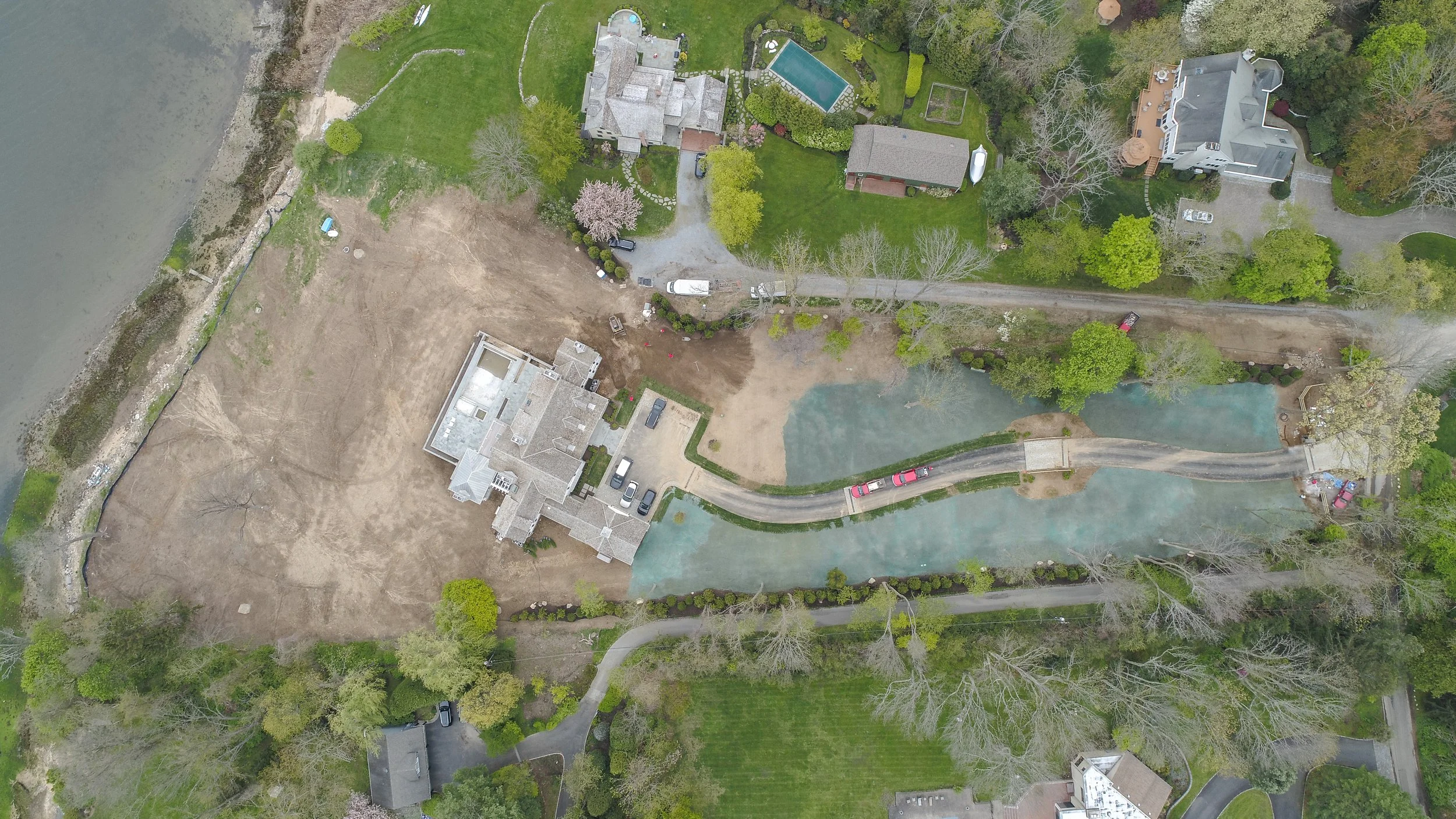
Phot by: Landscapes by Jeffco, Inc.
Construction = Compaction
When approaching a new-build property, typically the first thing to evaluate is compaction. Around most homes, the soil is rock-hard from months of machinery and foot traffic. Add in road base and construction debris, and you’ve got a challenging starting point for any landscape.
While observing the soils, start reading the grade — where is the water going? Then look up. Are there trees on-site or nearby? On Long Island’s North Shore, the answer is usually yes. Identify whether they’re deciduous or evergreen, and check if any within the work zone are properly protected. Finally, note the home’s orientation, wind exposure and how the sun moves across the property throughout the day.
The Site Is a Mess — Now What?
Messy conditions are normal on a new-build site. This is where experience and expertise protect your investment. It is easy to install a few trees, lay sod, and add mulch to make a property look polished in the short term — but without proper grading, drainage, soil conditioning, and irrigation, it won’t last.
Disclaimer: in landscaping, a “good deal” today often costs more than a fair quote for quality work. The burdens of a deal can be felt as quickly as a few months, and highly probable in no more than three years.
Everything Starts Below Ground
The foundation of a thriving landscape is invisible to most people. Here’s how we build it step by step:
Remove construction debris. Clear all leftover materials and rubble.
Rip & till. Loosen the compacted soil deeply so roots can move and breathe.
Amend the soil. We mix in organic amendments such as compost, topsoil, and fertilizers to lawns and beds — our go-to fertilizer is Sanctuary 3-3-4.
Rough grade. Establish elevations that direct water properly throughout the site.
Install drainage. This may include 12”x12” NDS catch basins and dry wells, or “daylighting” water into a rain garden.
Planting. The most rewarding part — bringing the landscape to life.
Fine grade. Clean up remaining rocks and set final elevations.
Irrigation, Outdoor Lights & Audio. Partner with a reputable irrigation team that considers sun, soil types, and plant water needs & growth habits. Outdoor lighting and audio professionals have a lot to consider - chose your team wisely.
Final grade. Smooth the ground after irrigation work to clean up trenches. Soaking trenches will help bring soils down.
Edge beds, mulch, and seed/sod. We prefer seed where possible, and Sweet Peet mulch is an exceptional — rather premium — choice.
Why Site Prep Matters
Quality site prep prevents nearly every common landscape failure:
Poor drainage leads to standing water, which suffocates roots and causes rot.
Compacted soil restricts root growth, leading to nutrient and water deficiencies.
Proper mulching retains moisture, reduces surface compaction, and provides nutrients as it breaks down.
Just avoid “volcano mulching” around trunks — that traps moisture and slowly chokes the plant.
So next time you think, “Why’s Jeffco ripping up my yard?” — you’ll know exactly why.
