
Intro to Organic Lawn Care
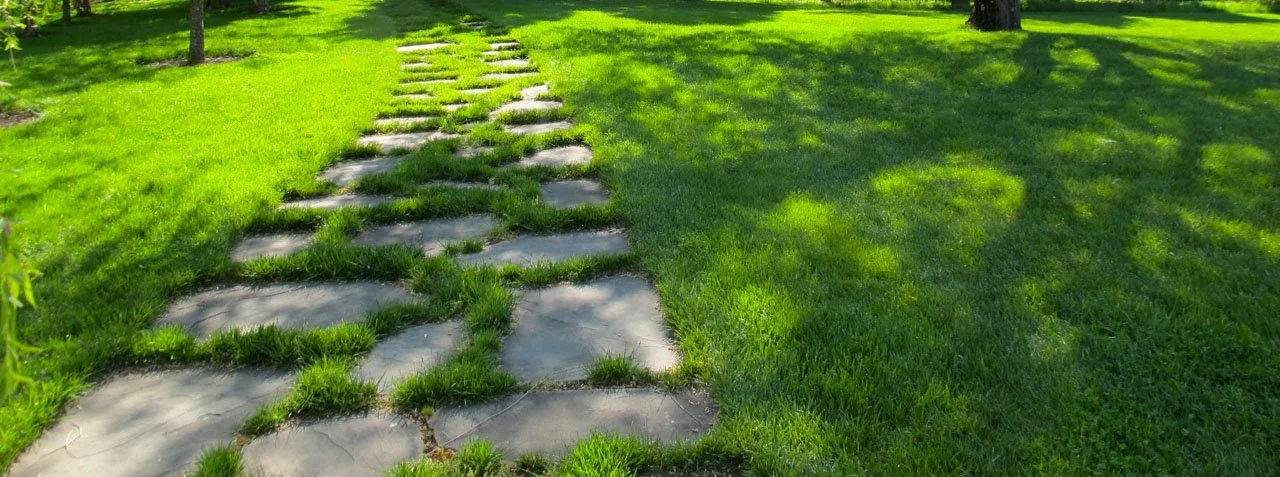
Source: Lamp’l, Joe. Organic and Natural Lawn Care Solutions. July 2013. Growing a Greener World [8]
Intro
Organic lawn care focuses on using natural products instead of synthetic chemicals to create a healthy, attractive landscape while preventing harmful runoff into our environment. [5] Although synthetic chemicals can produce a beautiful lawn, they often come at the expense of environmental health. Going organic improves soil quality by adding organic matter and increasing biodiversity. It’s better for the Earth, supports the long-term health of our lawns, and helps keep pets and children safe from unnecessary chemical exposure.
That said, going fully organic isn’t as simple as it sounds. Some pests and diseases can’t be treated organically-or at least not in a cost-effective way- and it may mean accepting an imperfect lawn at certain times of the year. Balancing these costs and considerations can be challenging. At Landscapes by Jeffco, we are working toward a partially organic lawn care program -other-wise coined as a Reduced-Risk Lawn Care Program- that prioritizes organic practices wherever possible, while using targeted pesticides and chemicals that are within regulations of the Environmental Protection Agency, only when it is aesthetically and financially reasonable. [5]
A Solid Foundation
An organic lawn program begins with prevention. The more practices that are done correctly and at the right time, the less need there will be to correct problems later with additional chemicals. The first priority is healthy soil. On established sites, a soil test is an excellent way to assess existing nutrient levels and soil pH. A pH range of 6.0-7.5 is ideal for optimal nutrient uptake in turf. [1] Soil testing also helps identify nutrient deficiencies, allowing you to select fertilizers that address specific needs rather than applying unnecessary products. If pH is low, apply lime -a mineral based amendment- to bring it up. Lime applications are typically done every 2-3 years. On Long Island, our soil pH levels typically fall acidic. [7] Different nutrients can only be up-taken by plants at specific pH ranges. Leaving your turf acidic will stop the uptake of phosphorus, magnesium, potassium, and nitrogen, among other essential nutrients. [1] Not only will the turf yellow out and perform terribly, but the nutrient will be left in the soil unable to go into the roots and leach into our ground water causing further pollution. Lime is key in getting that pH up and making sure nutrients are being uptaken by the roots of the turf. If pH is high, -which is rare here, or caused by overapplication of lime in previous years- apply sulfur or organic acidifying fertilizers. We’re happy to conduct soil sampling for your lawn if you have any concerns about its health, along with sampling for any additional plant beds.
If there are any bare spots in the lawn, patch them early. For patching small spots, you can use 100% perennial rye grass as it roots very quickly. [2] The fuller your lawn is, the less space there is for weeds to take hold. Once a lush lawn is established, it should be watered deeply -about one inch per week- to encourage strong root growth. But for larger areas or new lawn you should use no more than 20% perennial rye grass as it could take over other species in the blend. For an area with about 6-8 hours of sun a good mix could consist of 65% Kentucky bluegrass, 15% perennial ryegrass, 20% fine fescue.[2] A shadier area with 4-8 hours of sun, a fine fescue blend would do great. [2] If you’re still stuck on which seed blend to use, we recommend Progressive Growers Pro Gro Summer Stress Mix (Falcon IV Tall Fescue 39.81%, Renegade DT Tall Fescue 29.33%, Double Time GLS Perennial Rye grass 19.68%, Blue Bonnet Kentucky Bluegrass 9.87%, Weed content 0%) for areas ranging full sun- partial shade. It is not recommended to grow grass in areas that receive less than 4 hours of sunlight. [1] The lawn should also be mowed high, never removing more than one-third of the grass blade at a time, as cutting too much can stress the grass. Make sure your mower blades are sharp, as dull cuts damage grass blades and cause even more stress.[1] Stress creates opportunities for pests and diseases, so it should be avoided whenever possible. After mowing, leave the grass clippings behind to reduce the nitrogen needed in the soil by 25-50% [1], further lowering water pollution by avoiding excessive fertilizer leaching.
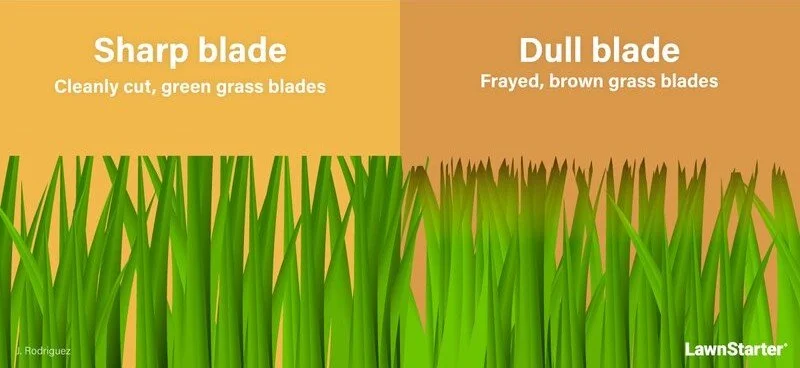
Source: Rodriguez, J. & Spiridon, S. (2025, March 10) [9]
Established lawns should be core-cultivated at least once a year to allow for air, water, and nutrients to more easily enter the roots. It can be done twice, but fall is preferred here on Long Island. The deeper the core you can find, the better, with some tools making cores up to 8-inches in length. Core depths are often hindered in typical lawns due to shallow irrigation lines. [5] They can also be left on top of the soil to decompose. Although a bit unsightly, these plugs have the power to return nutrients and organic matter back into the soil. Aeration is often paired with seeding. Since we typically grow cool-season grass lawns here, aeration and seeding is best performed in the fall as the lawn quickly recovers and has less competition from weeds. Preparing a solid soil foundation is key to a healthy lawn.
Topdressing is another task that is organic and can beautify the lawn by smoothing the surface. It involves layering no more than 1-inch of topsoil typically mixed with compost and sand to level the surface of the lawn. [6] This practice is more popular for sport field use such as golf and soccer as it can be very costly, but for someone willing to go above and beyond for a perfect looking lawn topdressing can be a great choice. It alternatively could only be used in low or bumpy spots to just raise those to create an overall smoother lawn. [6]
The Reduced-Risk Care
So far, everything mentioned in this article has been organic—but what if your lawn still struggles with weeds? Or you suddenly encounter a disease such as dollar spot or red thread? Or pests like grubs or hairy chinch bugs? The first step in addressing any of these issues is accurate identification of the culprit. Many of our lawn problems have specific solutions that are effective only at certain times of the year, and applying the wrong treatment at the wrong time can waste money and cause unnecessary environmental harm.
For weed control, the most organic option is hand pulling although the most expensive and offers varying results. If you’re considering a pre-emergent, corn gluten meal can be helpful, but keep in mind it will also inhibit grass seed germination, [5] so it’s not ideal if you plan to seed at the same time. To effectively eliminate weeds that have already emerged, you’ll typically need to move beyond organic methods and use reduced-risk chemical options, which tend to be more reliable and cost-effective.
When it comes to insects, there are more organic solutions available, but they are highly specific to the pest involved. Proper identification is crucial, as organic products can produce inconsistent results and are often less effective than non-organic insecticides. Organic disease control usually relies on minerals or beneficial bacteria to combat fungal issues, but these methods can also deliver variable outcomes. Overall, most lawn problems are easier to manage using non-organic products. However, if your goal is to keep chemicals out of the soil, and create a safe place for pollinators, organic approaches are the better choice.
The best way to minimize the need for any treatments is proactive lawn care from the start of the season. Practices like over-seeding help fill bare spaces, suppress weeds, and reduce lawn stress. Whenever possible, intervene organically- but if faster, more cost-effective results are needed, consider choosing reduced-risk chemical options.
Alternatives to a grass lawn
What if you were told you don’t need to rely on popular grasses to make a lawn? Beautiful traditional grass lawns can aid in increasing property value and serve as a high traffic play area for kids and pets. But a lawn is merely any ground cover that moderately tolerates foot traffic. Taking a trip to the Cornell Botanical Garden in Ithaca demonstrates the concept of a native lawn that has little to no care besides occasional supplemental watering and using a Scythe to cut back the height to about 8”-12”.[3] This project has changed on its own over the years through the plants competing and new native seeds joining the site. They also have chosen plants that require minimal hand weeding. This lawn redefines what a “classic” lawn can be, demonstrating both its versatility and how minimal the maintenance can be- without the need for fertilizers or pesticides. [3] Although this look may be too untraditional for some, there is a middle-ground option of mixing the less traditional plants into our typical lawn mixes.
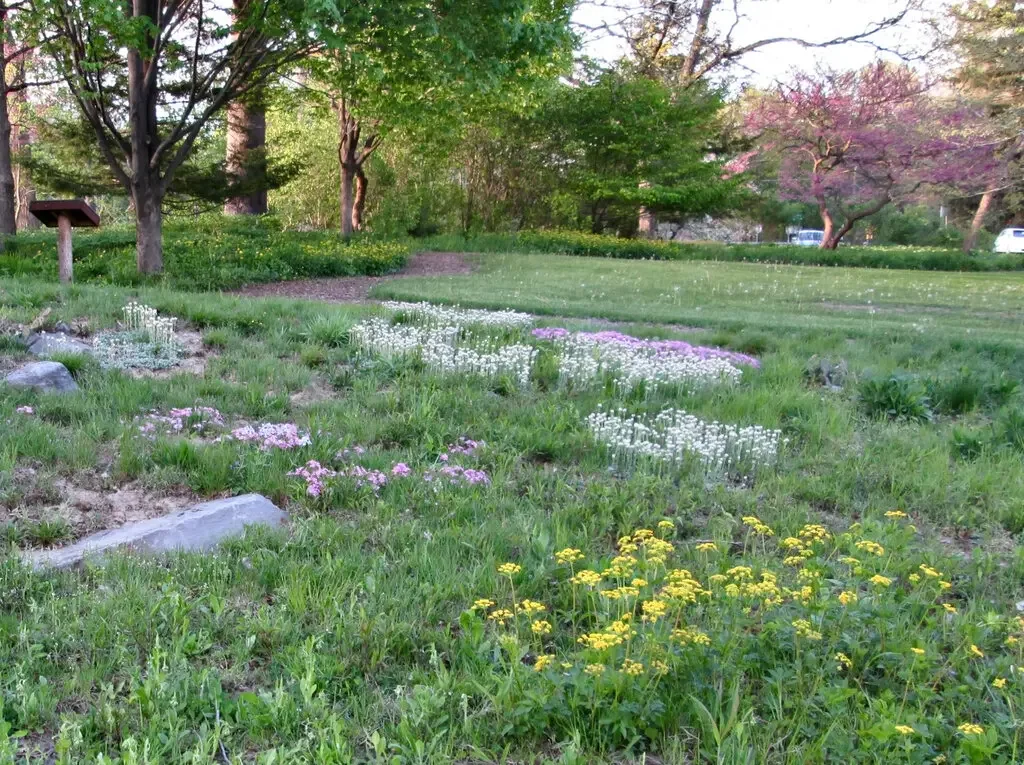
Source: Coalition, B. C. W., & Coalition, B. C. W. (2023, September 27). [3]
One example of this is mixing white clover seed into a cool-season grass mix or adding the seed to an established lawn. In the particular case of clover, not only does it make an interesting texture when flowering if you allow it to grow high, but it releases Nitrogen into the soil. [4] Nitrogen is commonly applied to lawns to make them greener and healthier. But, incorrectly doing so, like using more than 1lb of nitrogen per 1000 sq ft per application, or leaving granules on hardscape surfaces will lead to nitrogen leaching into our ground water. [1] Mixing white clover into lawns will reduce the need for supplemental nitrogen and feed our pollinators. [4] It should be noted an increase in pollinators could pose a risk to those who are allergic or to children playing on the lawn. In conclusion, there’s no single “right” way to care for a lawn- it’s a personal decision based on your needs and budget. If you’re open to a learning curve, choosing organic methods can be a rewarding step towards helping the environment.
——————————————————————————————————————————————————————
Text And Photo Sources:
Brewer, L. J. (2018). Lawn care: The easiest steps to an attractive environmental asset. cornell.edu. http://hort.cornell.edu/turf/lawn-care.pdf
Choose Seed | Cornell Turfgrass Program. (n.d.). https://turf.cals.cornell.edu/lawn/lawn-care-the-easiest-steps-to-an-attractive-environmental-asset/starting-fresh/choose-seed/?utm_source=chatgpt.com
Coalition, B. C. W., & Coalition, B. C. W. (2023, September 27). A viable alternative to conventional lawn? Cornell may have found one. (9/13/23) | Barnstable Clean Water Coalition. Barnstable County Clean Water Coalition. https://bcleanwater.org/a-viable-alternative-to-conventional-lawn-cornell-may-have-found-one-9-13-23/
Potter, D. A., Redmond, C. T., McNamara, T. D., & Munshaw, G. C. (2021). Dwarf white clover supports pollinators, augments nitrogen in Clover–Turfgrass lawns, and suppresses Root-Feeding grubs in monoculture but not in mixed swards. MDPI. https://www.mdpi.com/2071-1050/13/21/11801#
Soldat, D., Stier, J., Kerns, J., & Williamson, C. (n.d.). Organic and reduced-risk lawn care. https://douglas.extension.wisc.edu/files/2019/07/A3958.pdf
Stier, J. C. (n.d.). Lawn aeration and topdressing. https://cdn.shopify.com/s/files/1/0145/8808/4272/files/A3710.pdf
Uva, R. H., Neal, J. C., & DiTomaso, J. M. (1997). Weeds of the Northeast. Comstock Publishing Associates. https://s3.amazonaws.com/assets.cce.cornell.edu/attachments/75259/Control_of_Broadleaf_Lawn_Weeds.pdf?1762194027
Lamp’l, Joe. Organic and Natural Lawn Care Solutions. July 2013. Growing a Greener World, https://www.growingagreenerworld.com/organic-and-natural-solutions-for-your-lawn/
Rodriguez, J. & Spiridon, S. (2025, March 10). How to sharpen lawn mower blades. Lawnstarter. https://www.lawnstarter.com/blog/lawn-care-equipment/how-to-sharpen-lawn-mower-blades/