
Snow Plows and Salts
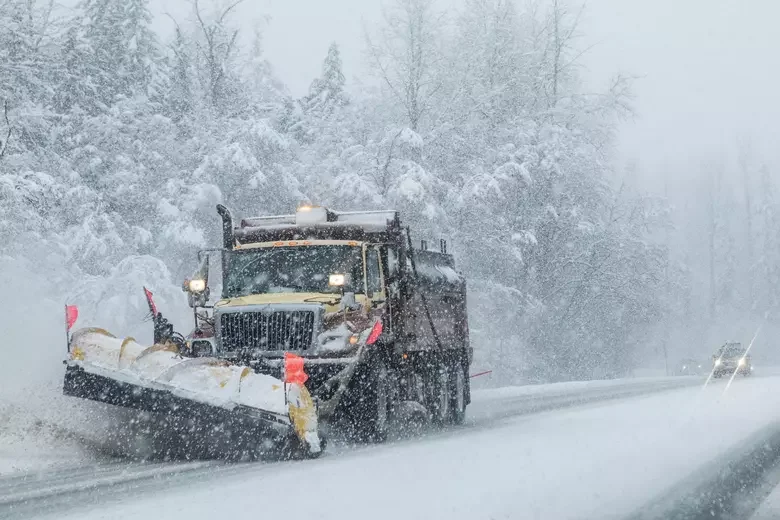
Source: Chrissy. (2026). Can you legally pass snowplows in New York State? [Photo]. In 107.7 GNA. NY, United States of America. [3]
Intro
Snowfall on Long Island requires road salt to keep the streets safe, but can harm plants and the environment. Our roads are treated with rock salt (sodium chloride). It melts ice effectively and is the most affordable option, but can damage landscape plants, pollute groundwater, and corrode metals and natural stones. Ground water travels underground until it emerges into our surface water such as streams, lakes, and bay; just one teaspoon of salt pollutes 5 gallons of water! [2] It does not break down or evaporate, rather stays in the environment until it’s diluted or flushed. Freshwater ecosystems experience stress when salt content is greater than they evolved to handle. Despite its drawbacks, rock salt remains necessary, so proper use is key- “One coffee mug (12oz) is all you need to cover 1,000 sq ft.” [2] Avoid overusing and sweep up excessive salt piles to be reused in the future to reduce environmental damage, reduce waste, and protect plants.
Salt Injury: Salt Spray vs. Salt soil
Plant with salt exposure in mind, especially near roadways, as well as driveways and walkways, where salt can build up in the soil, and winds can cause salt spray. Some plants tolerate salt spray better due to morphological traits such as- “hidden or submerged buds, thick surface wax, or resin-coated buds” [1], but fewer can handle salt in the soil, which can compact soil (clay particles increase), dehydrating the plant and making nutrient uptake more difficult. [1] The time which salt remains in soil depends on drainage and rainfall- sandy, well-draining soils can flush it out in a year, while compacted soils can take many seasons. If affected water deeply in spring to leach the salt from the soil; the more diluted it is, the less harmful it becomes.
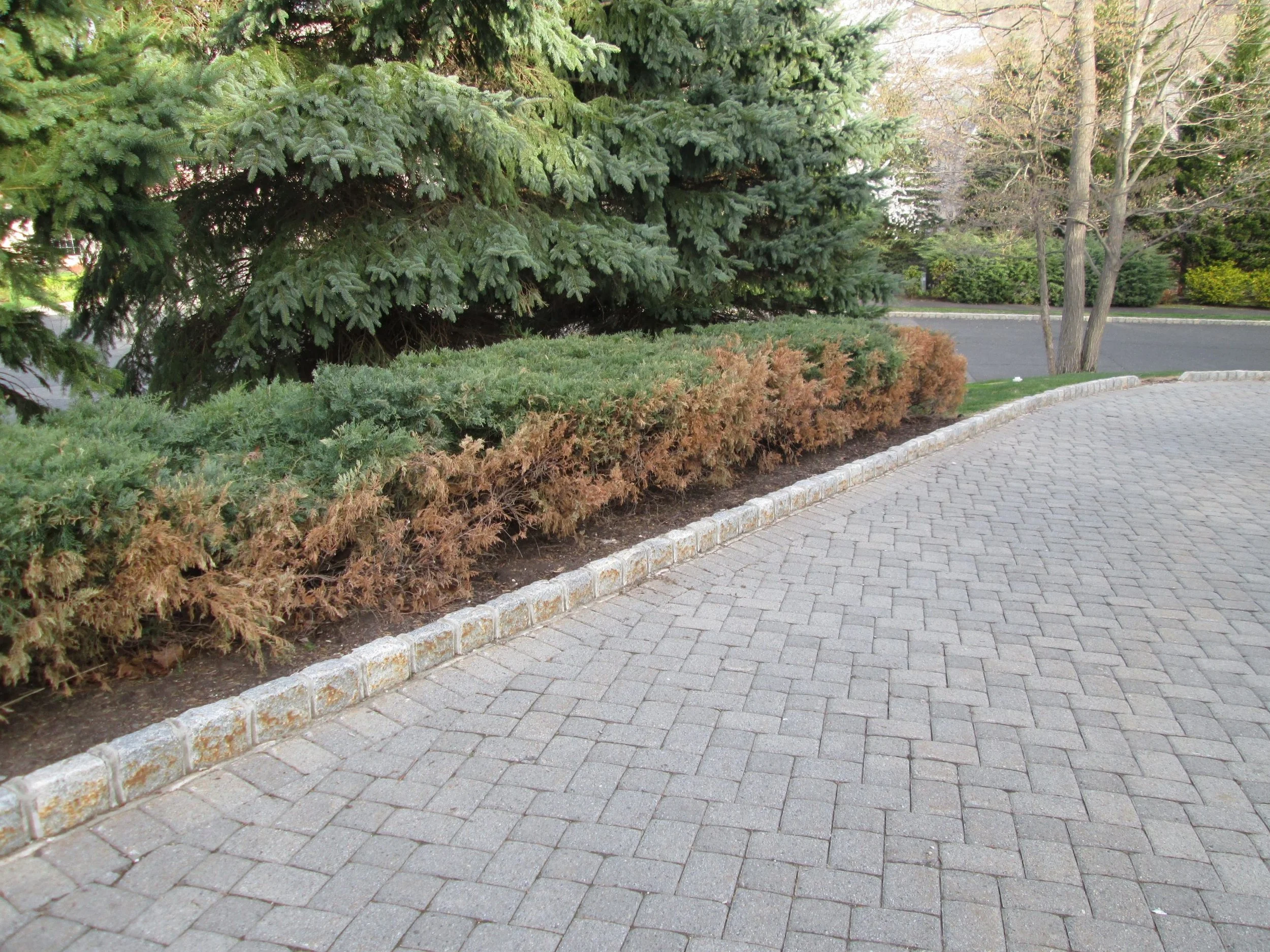
Source: Windish, B. (2017). Salt damage to plants and snow removal tips [Photo]. In Fairway Green Inc. [5]
Choose salt-tolerant plants for roadside areas such as staghorn sumac- a Long Island native, or one of many juniper varieties, which both handle spray and salty soils well. If using a non salt-tolerant plant, place it further back from the curb. Perennials cut back in the fall won’t have foliage to be affected by salt spray, but salt soil tolerance still matters. Varieties of sedum, creeping phlox, daylily, heuchera, hosta, and lily turf all have a medium tolerance. For groundcovers consider bugleweed or dwarf mondo grass.
Our lawns can also struggle from salt. Kentucky blue grass can do very poorly in salt, while fine fescue is a lot more resilient than many turf species. Using a seed mix that has more fine fescue in it, would provide the lawn with a stronger salt resilience. [2] We recommend using Progressive Grower’s Pro Gro Summer Stress Seed Blend .
Effects of Rock Salt on Pets
Rock salt can be very dangerous for pets, burning or cutting dog’s paws, and causing neurological and gastrointestinal damage if ingested. [7] Dog booties offer protection, but most dogs resist wearing them. An alternative is to use Pet-Safe Ice melts. Here at Landscapes by Jeffco we offer de-icing with optional pet-safe formulas for our clients with furry friends. If purchasing your own, beware of falsely-marketed pet-friendly ice melts that still contain salts or sodium chloride.
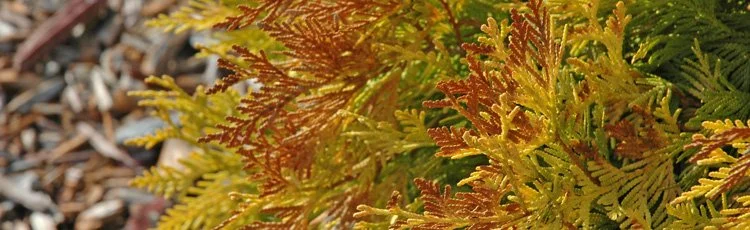
Source: Meyers, M. (n.d.). Road salt damage to Arborvitae [Photo]. In Melinda Myers. [4]
Alternatives
Some towns have reduced salt pollution by using food-based de-icers like beet juice, which is mixed with salt brine into a liquid solution. [6]The stickiness of the solution limits salt runoff. But upon reaching our water ways, it attracts microorganisms to eat the dissolved oxygen in the water that other sensitive aquatic creatures need. Pickle juice is another option. It works like salt water and can melt ice in temperatures as low as -6 degrees F. It can be pre-applied to surfaces to prevent ice sticking, but supplying it is impractical. Sand is also commonly used- on Long Island as well- but it cannot melt ice, only provide traction on slippery surfaces.
Conclusion
De-icing with rock salt remains essential, but can cause harm to nearby landscapes. When planting this spring, consider what areas in your landscape are most affected by salt exposure and choose salt-tolerant plants for those areas. If you are concerned about using rock salt, the University of Wisconsin extension offers a helpful table (Table 2) showcasing alternatives and their pros and cons. If using rock salt is necessary, apply only when precipitation and freezing is expected, and at proper rates; smart timing and responsible application are key.
——————————————————————————————————————————————————————
Photo and Text Sources:
Jull, L. (2012, August 13). Winter salt injury and salt-tolerant landscape plants. Wisconsin Horticulture. https://hort.extension.wisc.edu/articles/winter-salt-injury-and-salt-tolerant-landscape-plants/#prevention
Weisenhorn, J., & Trappe, J. (n.d.). The effects of deicing salts on landscapes. UMN Extension. https://extension.umn.edu/lawns-and-landscapes/effects-deicing-salts-landscapes
Chrissy. (2026). Can you legally pass snowplows in New York State? [Photo]. In 107.7 GNA. NY, United States of America. https://wgna.com/snow-plow-safety-new-york/
Meyers, M. (n.d.). Road salt damage to Arborvitae [Photo]. In Melinda Myers. https://www.melindamyers.com/articles/road-salt-damage-to-arborvitae
Windish, B. (2017). Salt damage to plants and snow removal tips [Photo]. In Fairway Green Inc. https://www.fairwaygreeninc.com/salt-damage-plants-snow-removal-tips/
Paton, L. (2019, February 25). Alternatives to road salts for safe winter driving. Izaak Walton League of America. https://iwla.org/alternatives-to-road-salts-for-safe-winter-driving/
PetMD Editorial. (2023, September 28). 6 things to know about Pet-Safe Ice Melts. PetMD. https://www.petmd.com/dog/general-health/things-to-know-about-pet-safe-ice-melts#typesofpet-safeicemelts